
NRF 2026 felt like a turning point for retail technology – not because of a single breakthrough, but because of a clear shift in tone. The conversations this year were less about what AI might do someday, and more about what it is already doing in live environments. Fewer moonshots, more operating metrics. Less theater, more accountability.
Two themes stood out across booths, panels, and side conversations: agentic AI for retail operations and the rapid maturation of AI and computer-vision-based self-checkout.
The first theme – agentic AI – was about execution. Retail AI is moving beyond dashboards and alerts into systems that take action within defined constraints. Inventory is being reordered automatically. Labor schedules are being adjusted based on demand signals and shrink risk. Exceptions are being surfaced only when human intervention is truly needed. The message was consistent: AI is no longer just informing operators; it is beginning to act on their behalf. Humans are increasingly supervisors of systems rather than operators of processes.
The second dominant theme was AI-powered checkout and loss prevention. Computer vision-based systems were everywhere, promising frictionless experiences through a combination of cameras, sensors, and behavioral models. Compared to even a few years ago, the progress is real. Item recognition is faster, models are more accurate, and vendors are more candid about edge cases and confidence thresholds. Theft detection, stockout identification, and post-transaction validation were common talking points, and many solutions are clearly live in real stores – not just demos.
A related undercurrent at NRF 2026 was a renewed focus on economics and scalability. Vendors spent more time discussing deployment costs, uptime, and operational overhead. Retailers asked fewer “can this work?” questions and more “where does this work?” questions. The industry appears to be settling into a more pragmatic phase, where fit and ROI matter as much as innovation.
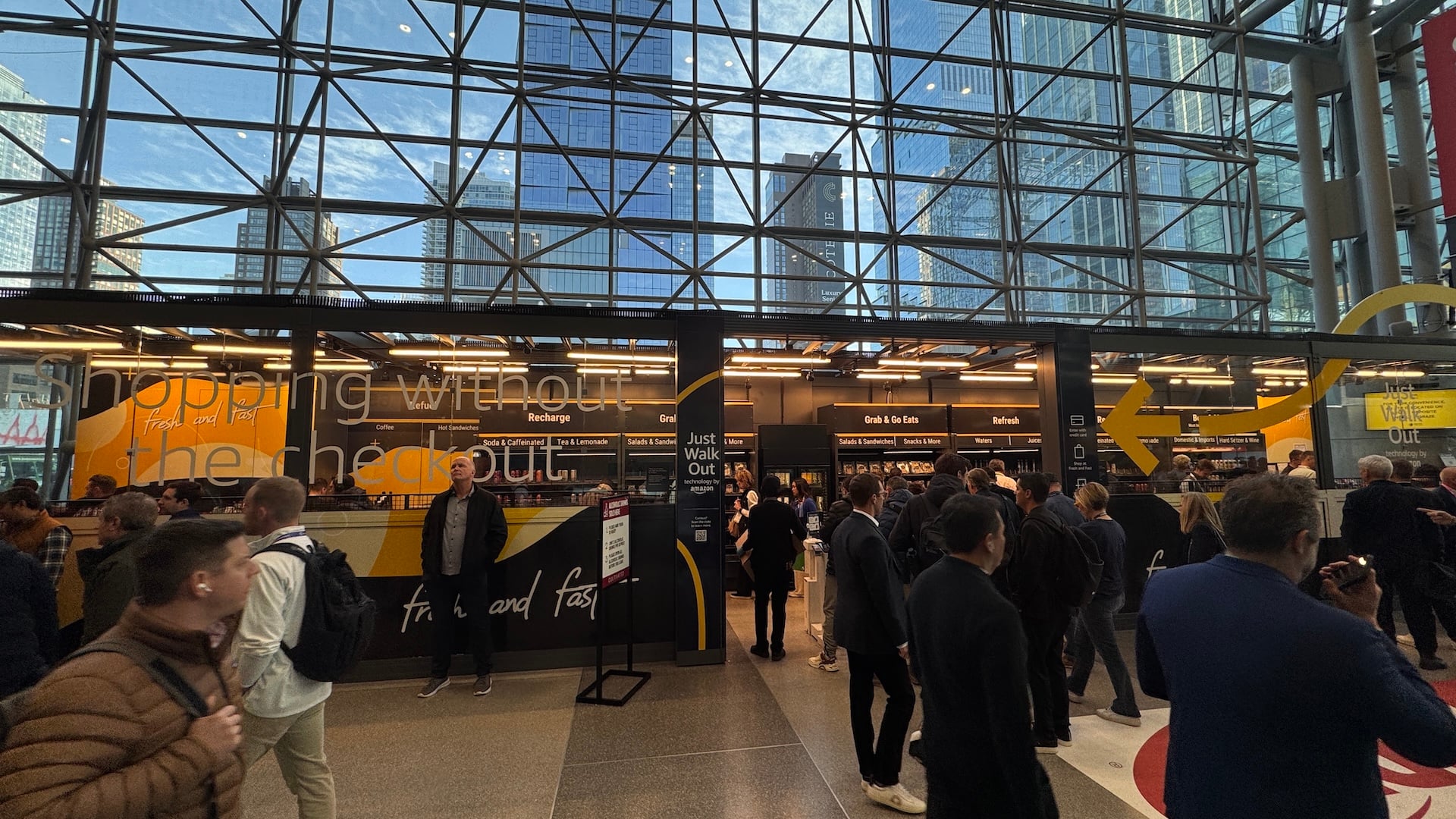
One quiet takeaway from NRF 2026, however, is that for many trusted convenience environments -such as hotels, offices, hospitals, and other semi-private, access-controlled locations – AI and CV-based self-checkout may be solving the wrong problem. These systems are impressive, but they often come with meaningful cost, environmental sensitivity, and operational complexity that make less sense where shoppers are already known, expected, or repeat users. In these settings, convenience retail rarely fails because checkout takes a few seconds; it fails when checkout becomes unavailable, confusing, or fragile during peak moments. During busy periods, the fastest experience isn’t “no checkout,” it’s parallel checkout – multiple paths that scale instantly, including terminals and phone-based options. Amazon’s recent decision to wind down its Go and Fresh store formats is a useful reminder that technical feasibility does not guarantee economic or operational fit at scale. AI clearly has an important role to play in convenience retail – but in trusted environments, its highest impact is often behind the scenes, not standing between the shopper and a quick, predictable purchase.